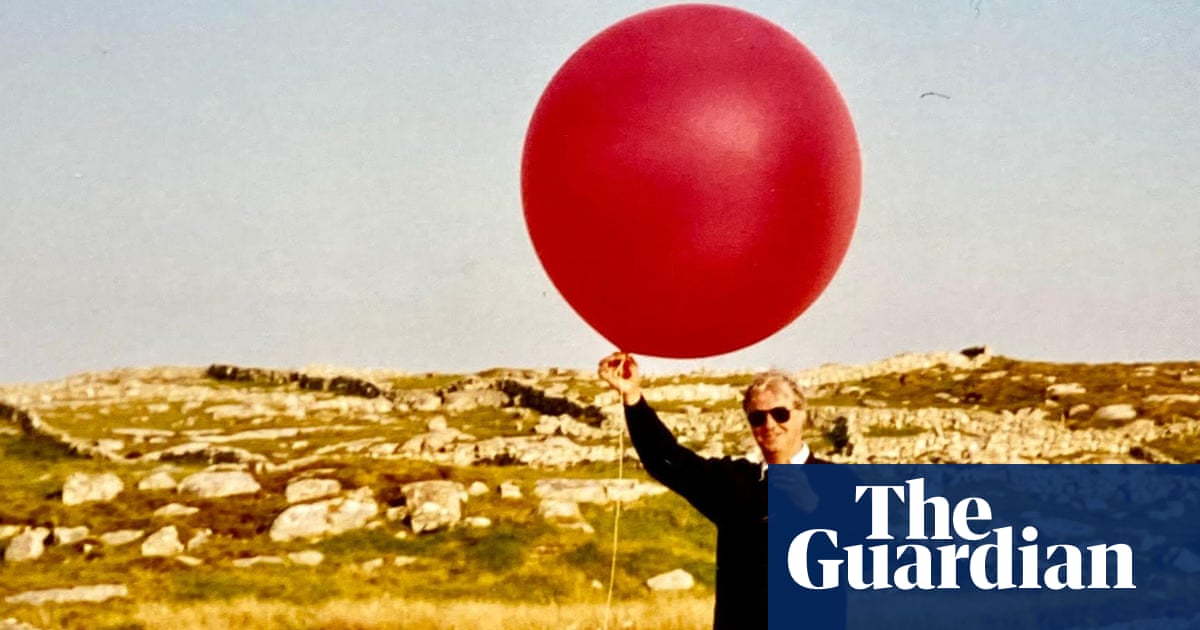
Stuart Penkett’s discovery of the chemical processes that cause acid rain changed our understanding of atmospheric pollution and what was needed to deal with it.
Penkett, who has died aged 87, and his colleagues at the Atomic Energy Research Establishment (AERE) in Harwell, Berkshire, published a landmark paper in 1979 in the journal Atmospheric Environment, explaining how sulfur dioxide, produced largely from industrial sources, is converted to sulfuric acid in rain clouds.
Acid rain has wreaked havoc on the environment throughout the 20th century, destroying ecosystems and rainforests, as well as destroying buildings across Europe and North America, where the chemicals were present in the atmosphere above industrialized areas.
Later, while at the University of East Anglia (UEA) in Norwich in the 1980s, Penkett worked to understand the processes that produce and destroy ozone in the Earth’s atmosphere. His measurements helped identify the role played by chlorofluorocarbons and other ozone-depleting substances (ODSs) and would contribute significantly to the successful implementation of the 1987 Montreal Protocol, an international agreement aimed at protecting the Earth’s ozone layer by ending the production and emissions of ODSs.
The Protocol was signed by all member states of the United Nations, the first agreement in the history of the United Nations to achieve universal approval. For many years after that, Penkett would contribute to the UN’s Scientific Assessments of Ozone Depletion reports, which supported the protocol. Former United Nations Secretary-General Kofi Annan described Montreal as “perhaps the single most successful international agreement to date”. What Penkett described in New Scientist magazine as “the terrible devastation caused by the ozone hole” has since been reversed.
Born in Eccles, Lancashire, Stuart was the only child of Arthur, a handyman at Gardner and Sons, an engine building company in Eccles, and Ilene (nee Henshaw), who was a secretary before she married. Penkett passed the 11-plus exam and attended Eccles grammar school before, in 1960, gaining a degree in chemistry from Leeds University.
He stayed in Leeds to get his PhD, specializing in chemical chemistry – the branch of physical chemistry that focuses on understanding chemical reactions and the factors that influence them. He then spent two years doing postdoctoral research in the US at the University of Southern California before returning to the UK to work in a laboratory at the international consumer goods company Unilever.
In 1968 Penkett was appointed chief (later director) science officer at AERE, initially focusing on how oxidise pollutes the atmosphere and the corrosive materials they come into contact with. In addition to his discovery of the processes that cause acid rain, his other work at AERE and later at UEA showed how our atmosphere breaks down pollutants, cleans the air we breathe, and how poorly modified home gas stoves can cause serious health risks to those who use them.
He left AERE in 1985 to join UEA, initially as a reader at the Natural Environment Research Council (NERC), before becoming professor of environmental science in 1990. He would remain at UEA until his retirement in 2004, after which he became adjunct professor.
Penkett established the Weybourne Atmospheric Observatory (WAO) on the Norfolk coast to the north of Norwich, to monitor pollutants and record other atmospheric phenomena. It is now one of the World Meteorological Organization’s network stations.
He also led the development of the UK Met Office’s C-130 aircraft, which became the Center for Atmospheric Measurements, an airborne laboratory capable of measuring atmospheric chemistry. In addition, by gathering scientists from different universities and research centers of NERC, he created the first coordinated national program for atmospheric chemistry, providing a blueprint for future global research projects.
Among many appointments, Penkett was a member of the Intergovernmental Panel on Climate Change, an affiliated scientist at the National Center for Atmospheric Research in Boulder, Colorado, and a member of the Max Planck Society, a non-governmental, non-profit association of German research organizations. He also worked for the World Meteorological Organization and the European Research Council, advising the British and US governments on climate and atmospheric science, and was awarded the Gaskell Memorial Award by the Royal Meteorological Society in 1987.
In 2003 he received the Haagen-Smit award, considered the “Nobel Prize” in air quality research, from the academic publisher Elsevier, for his first, seminal paper on the formation of acid rain.
Penkett’s has made the UEA school of environmental science the UK’s leading research group looking at measurements of atmospheric chemistry. He trained a large group of young scientists who are now working in important research areas, and he gave his time, especially with visitors from other countries, who would always be treated to a fish-and-chip meal after visiting WAO.
In 1962 Penkett married Marigold Gibbens, whom he had met during his PhD studies while posted to the Akers research laboratory in Welwyn, Hertfordshire. For many years he worked as his assistant.
He is survived by three of their four children, Fiona, Clive and Rebecca, and five grandchildren. Another son, Christopher, died in 2021.
#Stuart #Penkett #obituary