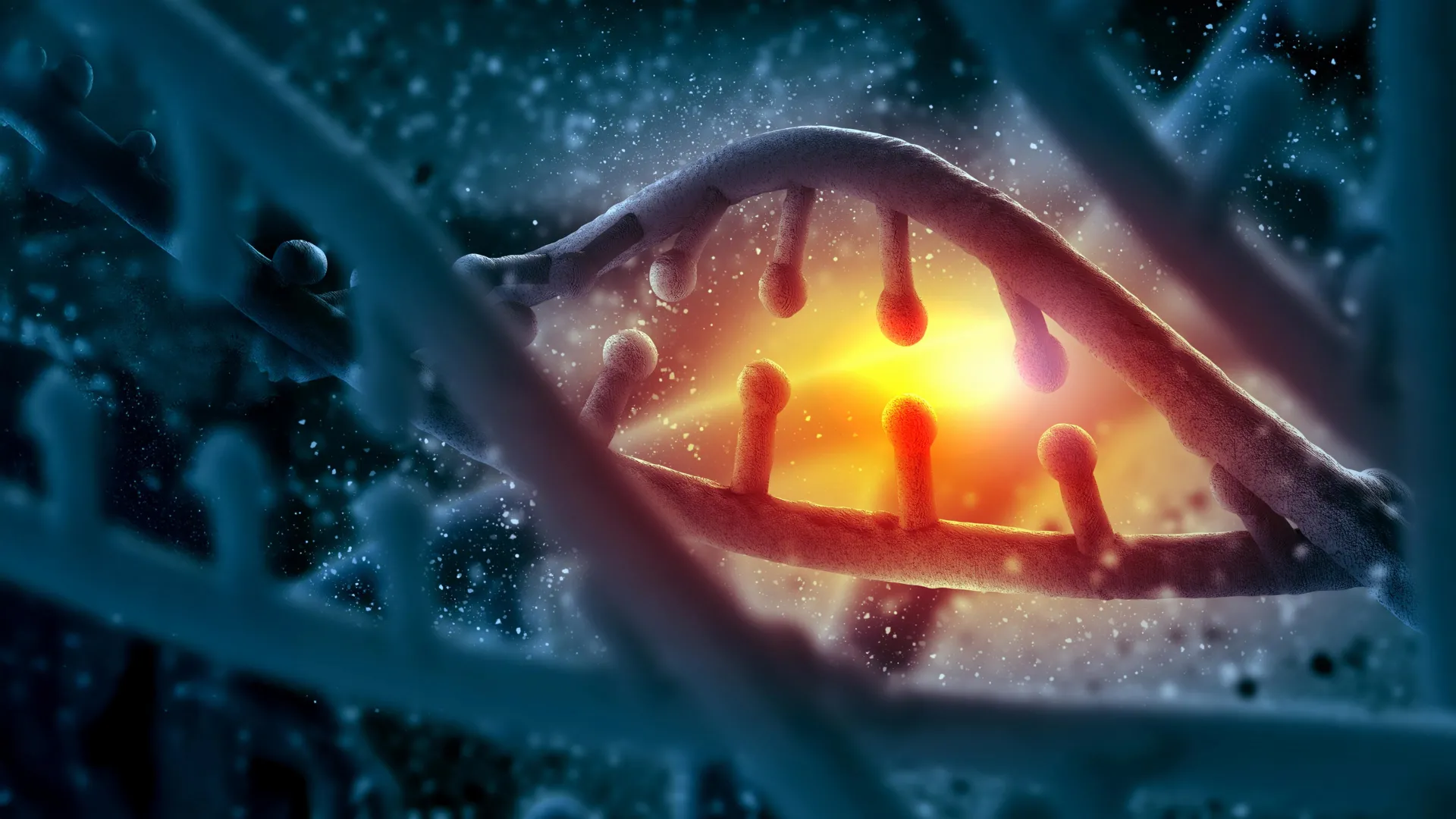
Researchers have discovered a powerful genetic mechanism that may help explain how some species evolve at an astonishing rate. Some parts of the DNA, known as “flipped” parts, seem to help fish adapt to new conditions more quickly and even split into completely new species. These genetic components act as evolutionary accelerators, preserving traits and accelerating change.
One of the biggest questions in biology is how Earth came to be home to so many species of plants and animals. The cichlid fish of Lake Malawi, in East Africa, are a striking example. In this one lake, more than 800 species arose from a common ancestor in much less time than it took for humans and chimpanzees to diverge.
Even more remarkable, all this diversity occurred in the same body of water. Some cichlids evolved into carnivores, while others specialized in eating algae, filter sand or plankton. Each species made its own part of the environment despite living together.
Scientists from the University of Cambridge and Antwerp set out to understand how this rapid burst of evolution could happen. Their findings were published in a journal Science.
Discovery of Flipped DNA Segments
In order to investigate, the researchers analyzed the DNA of more than 1,300 cichlid fish. They were looking for genetic components that could explain the extraordinary speed of evolution.
“We found that, in some species, large sections of DNA on five chromosomes were changed — a type of change called chromosomal inversion,” said lead author Hennes Svardal of the University of Antwerp.
Under normal conditions, reproduction involves recombination, a process in which the DNA from both parents joins together. However, within these flexible areas, this combination is restricted. As a result, genetic groups remain linked and are passed down from one generation to another intact. This preserves combinations of traits that are already beneficial, allowing evolution to continue successfully.
“It’s like a toolbox where all the functional tools are put together, saving the winning genes that help fish adapt to different environments,” said first author Moritz Blumer of Cambridge’s Department of Genetics.
“Supergenes” and rapid adaptation
These groups of linked genes are often called ‘supergenes’. In cichlid fish, they seem to play a major role in creating a variety of species. Although different species are still able to reproduce, these inversions reduce the size of their DNA, helping to maintain different traits.
This is especially important in areas where species overlap, such as open lake sand areas where there are no clear boundaries between habitats.
Many of the genes in these supergenes influence traits important for survival and reproduction, including vision, hearing and behavior. For example, fish that live in deep water (up to 200 meters) have to deal with low light, high pressure and different food sources compared to those near the surface. Their supergenes help maintain the special changes needed for those conditions.
“When different species of cichlids come together, complete inversions can be passed between them – bringing important survival characteristics, such as adaptation to certain conditions, to speed up the evolutionary process,” said Blumer.
A Broader Role in Evolution
Chromosomal changes do more than just maintain helpful traits. They can also act as sex chromosomes, influencing whether a person develops into a male or a female. Since sexual orientation plays an important role in how species evolve, this adds another dimension to understanding evolution.
“Although our study focused on cichlids, chromosomal changes are not unique to them,” said co-author Professor Richard Durbin, from Cambridge’s Department of Genetics. “They are also found in many other animals — including humans — and are still considered to be key to evolution and biodiversity.”
The researchers believe the findings could help answer the long-standing question of how life evolves so quickly under the right conditions.
“We have been studying the process of speciation for a long time,” Svardal said. “Now, by understanding how these supergenes evolve and spread, we are getting closer to answering one of the biggest questions in science: how life on Earth became so rich and diverse.”
#Scientists #discovered #DNA #supergenes #speed #evolution