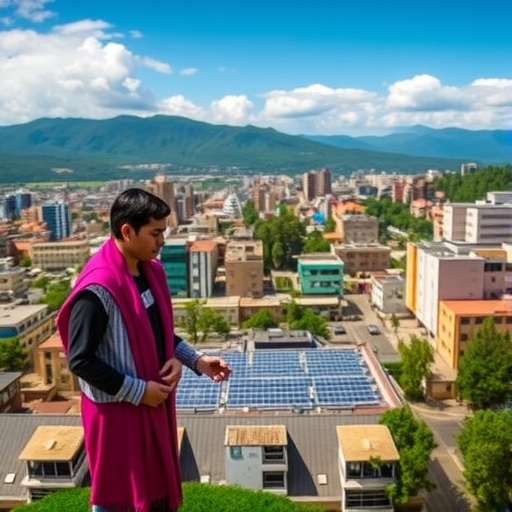
In a remarkable advance in the field of human genetics and precision medicine, researchers led by Victor Borda, PhD, of the University of Maryland School of Medicine (UMSOM), have conducted the most comprehensive genetic study to date focusing on urban populations throughout Peru. This extensive research provides unprecedented insight into the genetic diversity and admixture of indigenous Peruvians, challenging existing assumptions about Latin American genetic diversity and providing new ways to improve health care for this population. Published in the journal Communications Biology, the study marks a major step forward in understanding the complex genetic makeup shaped by centuries of history, migration, and social forces in Latin America.
Historically, Latin Americans have been underrepresented in genetic studies worldwide, making up less than four percent of research participants. When included, these different communities tend to be separated into a monolithic group, which may hide important differences in the nature of their ancestors. Such overlap has created a major obstacle to the discovery of unique genetic markers associated with health and disease in these populations and has hindered the effective use of appropriate medicine. By zooming in on the urban population of Peru, this study reveals a complex pattern of genetic contributions that have persisted despite drastic changes in living conditions, including colonial trauma and forced migration.
The team’s method involved collecting and analyzing blood samples from more than 400 volunteers from thirteen different regions of Peru. By using genome-wide studies that analyzed more than two million genetic markers in each participant, scientists could map out ancestors with astonishing resolution. Contrary to the expectation that the urban population represents the same mixture of indigenous Europeans, Europeans and Africans – the so-called “melting pot” – the research reveals that these people retain genes that are closely related to ancient indigenous populations from the nearby Andes and Amazonia. This persistence of indigenous practices highlights the resilience of indigenous tribes even through centuries of human and social upheaval.
An interesting and historical pattern emerged from the data on sex-specific contributions. Researchers have found that mitochondrial DNA, inherited from the mother, shows Indian origins, while markers passed down from the father show a greater European influence. This asymmetry is consistent with colonial living conditions where European men often fathered children with Indian women under coercive conditions, a practice protected by power imbalances and abuse. When the team looked deeper, they examined the X chromosome—which is passed on twice as often in females as in males—and found that it harbored a strong genetic marker of Native American mothers. This genetic evidence clearly shows the complex relationship of gender, culture and history embedded in the genome.
The importance of these findings goes beyond academic curiosity. They have profound implications for the use of precision medicine in Latin America, where genetics can influence disease risk, drug metabolism, and treatment efficacy. Dr. Timothy O’Connor, PhD, co-author and assistant professor at UMSOM, emphasizes that such a genealogical map allows for a better understanding of how genetic variation shapes health outcomes. The promise of Precision medicine lies in providing systematic measures that account for genetic variation within people who have been classified into broad groups, such as “Latin America” or “Hispanic.” This study provides a framework for achieving that granularity.
Beyond Peru, the research sets a precedent for expanding genomic studies to other understudied populations in Latin America and around the world. The large genetic variation within and between populations requires extensive research efforts to accurately determine human diversity. Doing so will promote more representative and clinically relevant genetic discoveries, thereby reducing health disparities. Equally important is an appreciation of the deeply rooted role of history in shaping modern genetics—a perspective that emphasizes the inseparability of genetics and anthropology.
Technically, the study used the latest high-throughput sequencing methods and powerful bioinformatic pipelines to accurately interpret large amounts of genomic data. The University of Maryland’s Institute for Genome Sciences (IGS) has provided critical scientific resources and expertise, using advanced computational techniques to dissect patterns of population admixture, identify ancestral genes, and identify sex-biased gene flow with unparalleled accuracy. This multidisciplinary approach highlights how combining genomics, computational biology, and historical knowledge can shed light on the evolution of human biology.
One of the strong contributions of the study is the careful dissection of regional differences across Peruvian cities. The variation observed within the genetic environment reflects how geography, migration routes, and local history have produced different admixture factors in each urban area. This perspective challenges simplified narratives and calls for additional health strategies related to community genetics. Urban settings, often viewed as homogenizing influences, instead preserve—and sometimes reinforce—ancestral genes.
In addition to discovering a genetic mix, the study sheds light on the broader context of genetics in Latin America. It reveals how populations have evolved under the specific pressures of the Andes and the Amazon, regions characterized by different ecosystems and environmental challenges. These evolutionary dynamics have implications for disease susceptibility and adaptive mechanisms, enhancing our understanding of the robustness of the human genome. As a result, research combines population genetics, evolutionary biology, and medical genomics, demonstrating the holistic approach needed to unravel the complex history of genetics.
Looking to the future, these findings highlight the importance of inclusive genetic research designs that prioritize the underserved. They advocate community-based research that respects local knowledge and respects historical perspectives while using advanced technologies. This approach not only improves our understanding of genetics but also promotes trust and equity in biomedical research. Increasing representation in genomic databases will improve diagnostic accuracy and treatment development tailored to Latin American ancestry.
Finally, a study led by the University of Maryland on the genetic makeup of Peru’s urban population shatters conventional wisdom by revealing the development of many genes that have been hidden by centuries of social change. By combining large amounts of genomic data, advanced diagnostic tools, and an unprecedented appreciation of history, the study points the way toward an equally accurate medicine that recognizes Latin American genes. This work serves as a clarion call to expand genetic studies beyond geographic and ethnic boundaries, with the goal of providing health care to diverse communities around the world.
Research Topic: People
Article Title: Unraveling the genetic structure and compositional changes of urban populations across Peru
News Release Date: April 2, 2026
Web references: http://dx.doi.org/10.1038/s42003-026-09671-2
Image Credits: University of Maryland School of Medicine
Keywords: Population genetics, Human genetics, Evolutionary genetics, Heritability, genetics, Admixture dynamics, Indigenous peoples, Latin American genetics, Precision Medicine, Genomic diversity
Tags: ancient genetics Perugenetic admixture dynamics Latin America Genetic differences in disease in Peru Health differences in PeruLatin American genetic epidemiologyNative Peruvian genetic distribution of personal health Latin America urban genetic population Peruprecision medicine Latin Americasociohistorical impact on genetics not represented by genetics in Peru
#Research #Reveals #Unexpected #Results #Perus #Urban #Population