The Strait of Hormuz in the Persian Gulf, through which a fifth of the world’s oil and gas supplies pass, has been largely closed to shipping since the war involving Iran, the United States and Israel, as well as, to a lesser extent, other nations, began last month.
The supply disruption has resulted in reduced access to the fossil fuels that countries around the world need to generate energy, leading to higher prices hitting global markets during that time.
The United Nations said that the problem caused by the closure of the strait highlights the important issue that energy security is no longer just about supply, but also about resilience and finding alternative sources of energy in an increasingly unstable world.
Why is it important
Concerns about the use of fossil fuels have traditionally been linked to climate change, due to the warming effects of the gases they produce when they are burned, but now energy security has become more prominent.
Earlier this year, the Secretary-General of the United Nations, António Guterres, warned that “in these times of war…
The result of the war
Since the outbreak of war in the Middle East, it is becoming clear that:
- Crucial oil and gas supplies are concentrated in conflict-prone areas
- Transportation routes may be disrupted by military escalation
- Fluctuations in prices quickly spread throughout the economy
The big picture
As countries around the world continue to rely on fossil fuels to meet the daily needs of their citizens and drive economic growth, it is clear that they are more vulnerable than ever to sudden supply disruptions.
Sustainable and strategic partnerships with other countries to ensure that the supply of electricity goes up as energy needs grow.
“Three quarters of people live in countries that are exporters of fossil fuels, dependent on energy that they do not control, at a price that they cannot predict,” said Mr. Guterres in February this year.
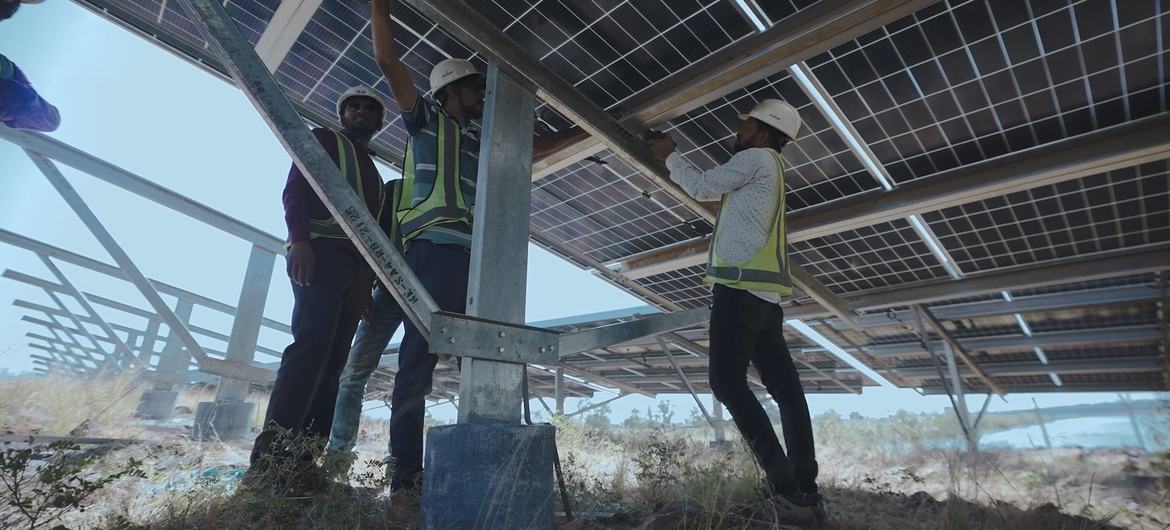
Technicians work on a solar panel in Chattisgarh State, India.
The head of the UN also warned of the danger of development budgets “loaded on fuel bills, due to environmental disturbances and disruption of supply”, insisting: “We must stop taking the transition away from fossil fuels as a taboo.”
The promise of renewable energy
One solution to guard against the crisis and chaos caused by lack of access to fossil fuels is to switch to renewable energy sources, for example solar, wind and hydropower.
These provide a different type of power supply, which is readily available and potentially cheaper.
Renewable energy is often locally sourced, produced domestically, and is therefore less vulnerable to global disruption that could cause environmental problems.
As UN climate chief Simon Stiell highlighted earlier this year, “renewables are the clearest, cheapest way of energy security and governance, protecting countries and economies from the shocks of war, trade chaos and ‘foreign power’ politics that leave every nation poor.”
The energy transition continues
The transition from fossil fuel sources to renewable energy has begun.
Kenya, in East Africa, has become a world leader in renewable energy, especially geothermal energy, which produces most of its electricity from renewable resources.
The South American country, Chile, is one of the fastest growing markets in the world. It has moved away from coal-fired power generation by promoting solar and wind power, taking advantage of the natural conditions of the type found in the Atacama Desert.
India is also focusing on expanding solar and wind infrastructure, integrating renewables into national development and electrification policies, although it is still heavily dependent on oil and gas that is often transported through the Strait of Hormuz from countries bordering the Persian Gulf.
Read the UN’s 2025 Energy Progress Report
People power, key factor
While energy security is a growing political issue that sovereign nations must address, it is also a personal one, affecting families and individuals around the world, as people face higher energy bills and a general increase in the cost of living.
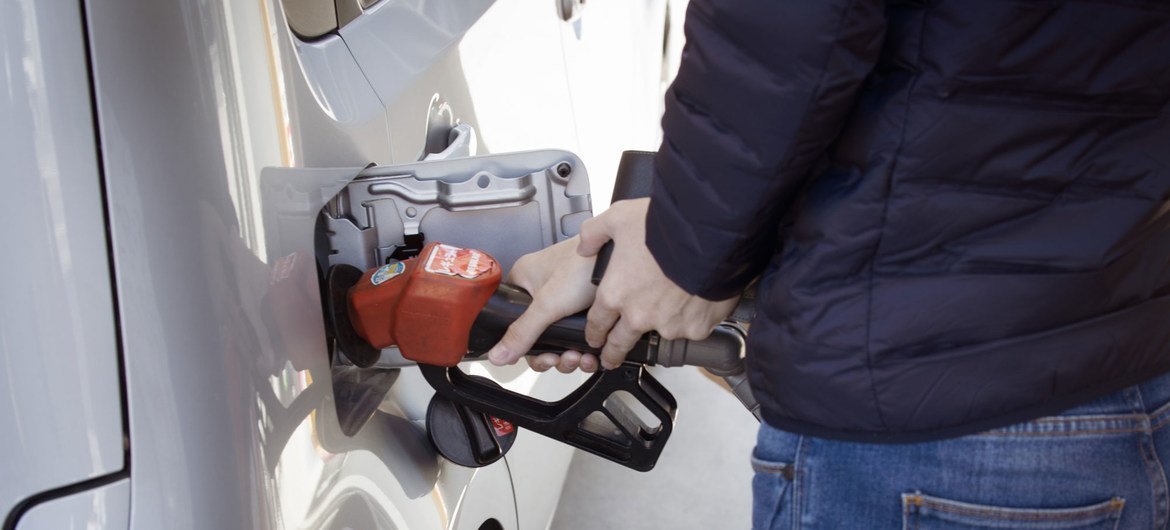
Gasoline prices are increasing worldwide.
In many cases, according to the United Nations, renewable resources are cheaper than coal, oil or gas, so they can directly reduce electricity costs for households.
Renewables can also protect people from future price increases by providing cheaper, more sustainable energy to the public.
#Middle #East #crisis #exposes #global #fault #line #urges #shift #renewables